
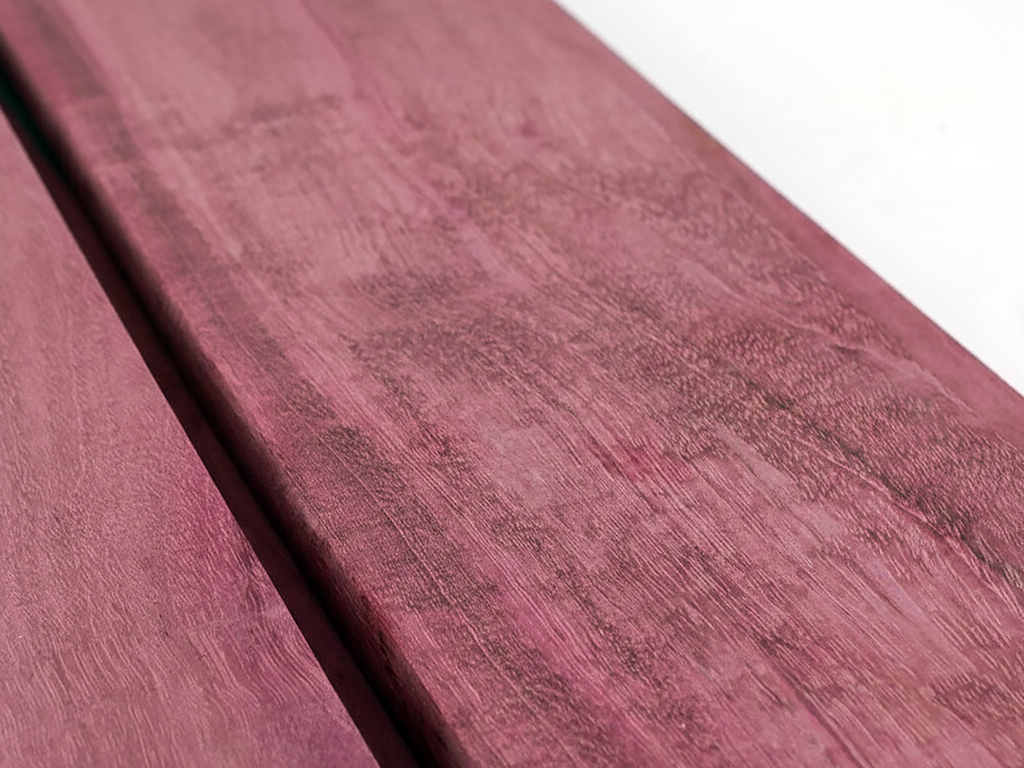
It’s not just a novelty color. Purpleheart is dense, durable, and one of the few hardwoods where the name isn’t a marketing stretch. Here’s why woodworkers keep coming back to it — and what to know before you buy.
Appealing Aesthetics
- Striking Color: Freshly milled Purpleheart starts out grayish-brown, then deepens into a rich eggplant-purple within days of exposure to air and light.
- Consistent Grain: Grain is typically straight and fine, giving a clean, uniform look that pairs well as an accent against lighter woods.
Excellent Workability
- Purpleheart is dense — Janka hardness in the 1,860–2,520 lbf range — so sharp, carbide-tipped tools matter. Dull blades will burn or tear rather than cut cleanly.
- Natural resins can gum up blades at high feed rates; slower, steady passes give cleaner results.
- Tearout risk is higher on end grain and around grain reversals, so light passes and climb cuts help.
Durable
- Its hardness holds up well to dents and scratches, making it a strong choice for cutting boards and tabletops that see daily use.
- With the right finish, Purpleheart pieces hold their color and structure for years rather than fading or wearing down quickly.
- It takes finish well, though a UV-inhibiting topcoat is the key to keeping the purple from browning out over time.
Common Uses of Purpleheart Hardwood
Purpleheart is used more intentionally than a default hardwood — most projects lean on it for color impact rather than volume.
Accent Furniture and Inlay
Legs, trim, and accent panels where a pop of color matters more than covering a large surface. It’s a favorite for stripes and borders in mixed-wood furniture.
- Cutting Boards and Charcuterie Boards
- Hard, durable, and visually striking when paired with lighter woods like Maple or Ash.
- Knife Handles and Turned Items
- Density holds fine detail well under a lathe, making it popular for handles and small turned pieces.
- Flooring and Wall Accents
- Used as a feature strip or inlay border rather than field flooring, given its cost and hardness.
Finishing and Care
Purpleheart’s color is the whole reason people choose it, so protecting that color matters:
- Use a UV-protective finish. Oils alone won’t block UV the way a film finish will — without one, color fades toward brown faster.
- Avoid prolonged direct sunlight. Like Cherry, Purpleheart ambers with UV exposure over time.
- Test finishes on an offcut first. Some finishes pull warmer tones out of the wood that shift the final color more than expected.
- Re-finish when needed. A fresh coat revives the depth of color as pieces age.
The Purpleheart Difference
Selecting Purpleheart is a choice to make a statement — its color and density make it stand out in ways few other hardwoods can. Whether you’re adding a single accent strip or building a full piece around it, it rewards a bit of extra care in tooling and finishing.
At Forever Hardwood, our Purpleheart is milled S4S in-house, so you’re getting consistent thickness and a clean, ready-to-use surface — not a rough board you have to dimension yourself.
Ready to add some color to your next project? Browse our Purpleheart 4/4 S4S lumber today.